Every business has something worth sharing. It could be a new product, a company milestone, an important announcement, a partnership, or a major achievement. But publishing news on your website is only the first step. The real challenge is getting that news in front of the right people.
Today, audiences discover brands through more than traditional search engines. They read online publications, follow industry news, search Google, and increasingly ask platforms such as ChatGPT and other AI-powered tools for recommendations, explanations, and information.
This shift has created a new opportunity for businesses: building visibility across both traditional search and AI-driven discovery.
That is where a well-planned press release distribution strategy can make a difference.
A professionally written and strategically distributed press release can help your announcement reach a wider audience, introduce your brand to relevant publications, create opportunities for media coverage, and strengthen your overall digital presence.
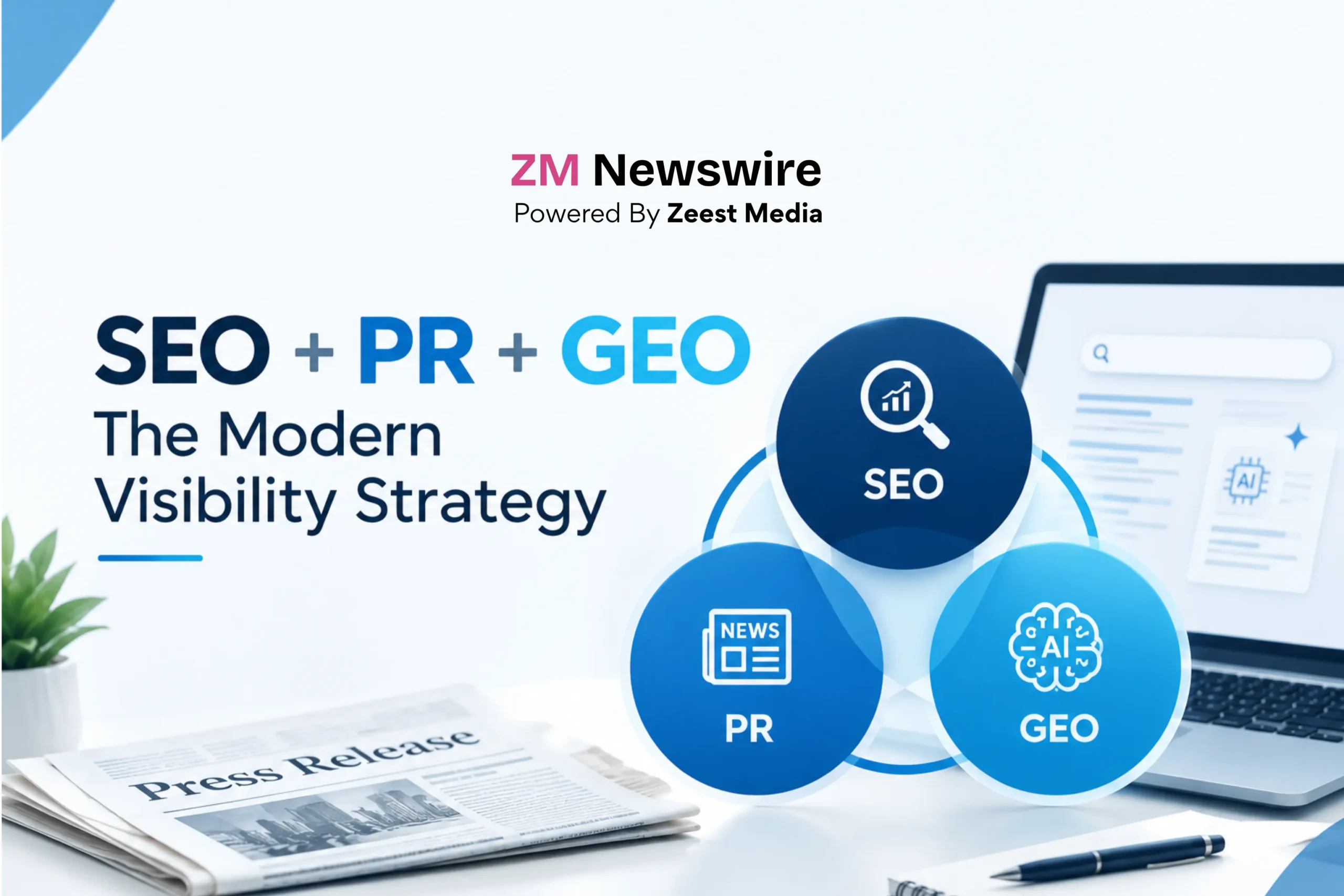
Let’s explore how businesses can make their news more discoverable and why SEO and Generative Engine Optimization (GEO) deserve a place in modern public relations.
Why Press Release Distribution Still Matters
A company announcement has little value if nobody sees it. Even an informative announcement can go unnoticed when it remains buried on a company’s website.
Press release distribution helps bridge that gap by making news available beyond your own digital channels.
Instead of relying entirely on your website, email list, or social media followers, you can use distribution services to introduce your announcement to a broader network of media outlets and potential readers.
A good distribution strategy can support several business objectives:
- Increase brand awareness: Introduce your company, products, and announcements to audiences who may not know your business.
- Reach relevant publications: Put your news in front of journalists, editors, publishers, and industry-focused media outlets.
- Build brand credibility: Earned media coverage and independent editorial attention can strengthen how people perceive your business.
- Support online discoverability: Make company announcements available through additional relevant online sources.
- Create marketing opportunities: Give your sales, marketing, and communications teams useful material to share across different channels.
However, distribution alone does not guarantee media coverage, search rankings, or customer acquisition. The announcement itself, the relevance of the audience, the quality of the publication, and the overall strategy all matter.
The Changing Landscape of Online Visibility: SEO Meets GEO
For years, businesses have invested in Search Engine Optimization (SEO) to help their websites appear when potential customers search for relevant products, services, and information.
That remains important. However, the way people discover information is expanding.
People still use Google and Bing, but they are also asking questions through conversational search experiences and AI-powered assistants.
For example, someone looking for a reliable marketing agency might search Google for:
“Best digital marketing agencies for small businesses.”
Another person might ask an AI assistant:
“Which digital marketing agencies specialize in helping small businesses grow online?”
Both searches have a similar purpose, but the discovery experience is different.
This is where Generative Engine Optimization (GEO) comes into the picture.
What Is SEO?
SEO is the process of improving a website’s visibility in organic search results. It involves several elements, including:
- Relevant and useful website content.
- Search-friendly page titles and descriptions.
- Proper website structure and internal linking.
- Technical performance and crawlability.
- Relevant references and links from other websites.
- A positive experience across desktop and mobile devices.
For a business, effective SEO helps potential customers discover its products, services, and expertise when searching for related topics.
What Is GEO?
Generative Engine Optimization focuses on making a brand’s information easier to discover, understand, and potentially reference in AI-generated answers.
Rather than focusing exclusively on traditional search result listings, GEO considers how a company’s information appears across AI-powered discovery experiences.
This involves building a clear and consistent online presence through:
- Accurate and consistent company information.
- Useful, well-structured website content.
- Original insights and industry expertise.
- Relevant mentions across trusted publications.
- Clear descriptions of products and services.
- Accessible, crawlable web pages.
It is important to understand that GEO is still an evolving area. There is no guaranteed formula for getting a brand mentioned in ChatGPT, Google AI Overviews, or other generative platforms.
Google’s own guidance on AI features in Search explains that traditional SEO fundamentals remain relevant. Websites should focus on helpful content, accessibility, technical requirements, and clear information rather than chasing shortcuts.
Why Businesses Should Consider Both
SEO and GEO are not competing strategies. They address different aspects of an increasingly connected discovery environment.
A business that invests only in traditional search visibility may overlook opportunities to strengthen its presence across newer discovery platforms.
Likewise, focusing on GEO while ignoring technical SEO, content quality, and website structure can leave important visibility gaps.
The stronger approach is to build a consistent digital presence that serves both human readers and the systems helping them find information.
How Press Release Distribution Supports SEO and GEO
Press release distribution is not a replacement for SEO or GEO. It is one part of a broader communications and visibility strategy.
When a business publishes a meaningful announcement and distributes it through relevant channels, it creates additional opportunities for people to encounter its brand and information.
Here are some of the ways this can contribute to a stronger online presence.
1. Expand Your Brand’s Online Footprint
Your company website is an important source of information, but it should not be the only place where your brand appears.
Relevant industry publications, news websites, and media coverage can introduce your company to audiences outside your existing customer base.
For example, imagine a technology company announcing the launch of a new software platform.
If the announcement reaches relevant technology publications, readers may encounter the company’s name, learn about its services, and visit its website for more information.
Over time, meaningful coverage across relevant sources can contribute to a broader and more recognizable online presence.
The focus should be on relevance and editorial value rather than simply collecting as many publication links as possible.
2. Create More Opportunities for Brand Discovery
Search engines and AI-powered platforms need accessible information to understand businesses, products, and industry topics.
A company announcement published on your website provides one source of information. Independent coverage and relevant third-party references can provide additional context.
Consider a business that introduces an innovative payment solution.
Its announcement might explain:
- What the solution does.
- Which problem it addresses.
- Who can benefit from it.
- What makes the product different.
- Which industry it serves.
When this information is presented clearly and supported by consistent company details, it gives readers and information-discovery systems more context about the business.
Distribution creates opportunities for this information to reach additional sources, although publication, indexing, retrieval, and AI citations are never guaranteed.
3. Strengthen Brand Recognition and Credibility
People are more likely to investigate a company when they can find meaningful information about it beyond its own website.
Relevant media coverage can help establish a stronger public presence, particularly when an announcement offers something genuinely newsworthy.
For example, a startup announcing a significant funding round, a healthcare company introducing a new service, or a manufacturer entering a new market may have information worth sharing with industry publications.
The important distinction is between simply publishing promotional material and communicating something that matters to an audience.
A strong press release should answer a real question: Why should anyone care about this announcement?
4. Support Your Broader SEO Strategy
Press releases can contribute to an SEO strategy by introducing company information to external audiences and creating opportunities for legitimate editorial references.
However, there is an important distinction between earning a relevant editorial mention and purchasing links for ranking purposes.
Google identifies paid links intended to manipulate search rankings, including links in distributed press releases, as a potential link spam issue.
Businesses should not treat every syndicated publication as a valuable backlink.
Instead, prioritize relevant coverage, genuine editorial interest, accurate information, and referral opportunities.
For more details, see Google’s official link spam policies.
How to Write a Press Release That People Actually Want to Read
Distribution can expand the reach of an announcement, but it cannot make an uninteresting story newsworthy.
A poorly written press release may get published without generating meaningful attention. A well-prepared announcement gives journalists, editors, and readers a clear reason to continue reading.
Here are the essential elements of an effective press release.
Start With a Newsworthy Headline
Your headline is often the first thing a reader sees.
Avoid generic headlines such as:
“ABC Company Announces Exciting New Developments.”
Instead, communicate the actual announcement.
For example:
“ABC Technologies Introduces a New Payment Platform for Small Businesses.”
The second headline tells readers what happened and who may find it relevant.
Keep it specific, informative, and easy to understand.
Answer the Most Important Questions Early
Readers should not have to go through several paragraphs to understand your announcement.
The opening paragraph should clearly explain:
- Who is making the announcement?
- What has happened?
- When is it happening?
- Where is it relevant?
- Why does it matter?
This approach gives readers the essential information immediately and provides a clear foundation for the rest of the story.
Include Facts, Figures, and Relevant Details
Specific information makes an announcement more useful.
Depending on the topic, include:
- Product launch dates.
- Company milestones.
- Verified business figures.
- Locations and expansion details.
- Relevant industry information.
- Statements from company representatives.
Avoid unsupported claims and exaggerated language. Every important statement should be accurate and verifiable.
Add a Meaningful Company Quote
A quote can provide a human perspective that factual reporting alone may not communicate.
For example, a company founder might explain why a new product was developed, which customer problem inspired it, or what the announcement means for the business.
Keep quotes natural and relevant. They should add information rather than repeat the headline.
Provide Accurate Company Information
Conclude with a concise company description, commonly known as a boilerplate.
Include the company’s name, primary services, website, and other relevant details.
Consistency matters. Make sure your company information matches the details published on your official website and other business profiles.
A Practical Strategy for Improving AI and GEO Visibility
Many businesses are interested in appearing in AI-generated answers, but they are unsure where to begin.
The best starting point is not a collection of shortcuts. It is a stronger foundation of accurate, useful, and publicly accessible information.
Here is a practical approach.
Step 1: Establish a Clear Brand Identity Online
Make sure your website clearly explains:
- Who your company is.
- What products or services you offer.
- Which industries you serve.
- What problems you solve.
- How customers can contact you.
Avoid using different descriptions of your business across important online properties.
A consistent brand identity makes it easier for people to understand what your company does.
Step 2: Publish Original and Useful Content
Your website should contain more than promotional service descriptions.
Publish informative articles, industry insights, product announcements, case studies, and answers to questions your customers regularly ask.
For example, a cybersecurity company could publish practical information about data protection, common security risks, and emerging threats.
This creates useful material that people can discover, reference, and share.
Step 3: Build Relevant Media Presence
Identify publications that cover your industry, audience, and business category.
A technology startup should prioritize relevant technology and business publications rather than distributing every announcement to unrelated websites.
Focus on:
- Industry relevance.
- Editorial standards.
- Audience quality.
- Publication credibility.
- Accurate brand information.
A smaller number of relevant placements may be more valuable to your business than a large volume of unrelated publications.
Step 4: Make Your Website Easy to Discover
Even excellent content cannot perform well if search engines cannot access it.
Review your website’s:
- Indexing settings.
- Robots.txt configuration.
- XML sitemap.
- Internal links.
- Mobile usability.
- Page loading performance.
- Structured data accuracy.
Google’s Search Essentials provides a useful starting point for understanding the requirements and best practices.
You can also use Google Search Console to monitor indexing, search performance, and technical issues.
Step 5: Measure More Than Search Rankings
Traditional keyword rankings are useful, but they do not tell the entire story.
A broader visibility measurement strategy can include:
- Organic search impressions.
- Relevant website traffic.
- Referral visits from publications.
- Brand searches.
- Media mentions.
- Qualified leads.
- AI platform brand mentions and citations.
For AI visibility, monitor a consistent set of relevant questions across the platforms that matter to your audience. Record whether your company appears, which sources are referenced, and how consistently the results change over time.
This helps you understand whether your brand presence is improving instead of relying on a single search result or AI response.
Common Press Release Distribution Mistakes to Avoid
Businesses sometimes invest in distribution without giving enough attention to the quality of their announcements or the publications they target.
These mistakes can reduce the value of an otherwise useful campaign.
1. Distributing promotional content as news
A press release should communicate a meaningful development, not simply advertise a product or repeat a sales message.
2. Targeting every available publication
A publication is not automatically valuable because it accepts press releases. Relevance, audience, and editorial quality should guide your selection.
3. Writing for search engines instead of readers
Excessive keyword repetition makes announcements difficult to read. Use relevant terminology naturally and prioritize clarity.
4. Expecting guaranteed backlinks
Not every publication provides a followed link, and not every mention contributes directly to search rankings. Focus on legitimate coverage and the value of reaching relevant readers.
5. Ignoring what happens after publication
Distribution should not be the final step. Track coverage, monitor referral traffic, share published announcements, and incorporate meaningful results into your wider marketing strategy.
6. Making unsupported AI visibility promises
No distribution provider can honestly guarantee that a press release will appear in ChatGPT responses or Google AI Overviews. Treat GEO as a long-term visibility effort rather than a guaranteed outcome of one campaign.
Why Choose ZM Newswire for Your Press Release Distribution?
Getting your announcement published is important, but choosing the right distribution partner is equally important.
ZM Newswire, powered by Zeest Media, helps businesses take their announcements beyond their own websites and put their news in front of wider audiences.
Whether you are introducing a new product, announcing a partnership, sharing a company milestone, or communicating an important business update, the goal is to make your news easier to discover.
Our approach brings together the fundamentals of press release distribution with the changing needs of modern online visibility.
With ZM Newswire, businesses can focus on:
- Wider news exposure: Give company announcements opportunities to reach audiences beyond your existing channels.
- Strategic distribution: Put your news in front of relevant publication networks.
- Brand visibility: Strengthen your company’s presence across the wider digital landscape.
- SEO-conscious communication: Publish clear, informative announcements that support your broader content and search strategy.
- AI and GEO awareness: Build a consistent, accessible brand presence as people increasingly discover information through AI-powered platforms.
Your announcement deserves more than a place on your company website. Give it the opportunity to reach the people who need to hear about it.
Explore ZM Newswire’s press release distribution services and discover how to take your next announcement further.
Frequently Asked Questions
1. What is press release distribution?
Press release distribution is the process of sharing an official company announcement with media outlets, news publications, journalists, and other relevant channels to increase its reach and potential exposure.
2. Does press release distribution help SEO?
It can support a broader SEO strategy by increasing brand exposure, creating opportunities for relevant editorial mentions, and helping audiences discover company information. However, distribution does not guarantee higher rankings or followed backlinks.
3. What is the difference between SEO and GEO?
SEO focuses on improving visibility in traditional search engines, while GEO focuses on improving the discoverability and potential representation of information in AI-generated responses. Both benefit from accurate information, useful content, and a technically accessible website.
4. Can press releases help a brand appear in ChatGPT?
Press releases can contribute to a brand’s publicly available information and online presence. However, there is no guarantee that ChatGPT or another AI platform will retrieve, mention, or cite a particular announcement.
5. How often should a business distribute press releases?
There is no fixed number that works for every business. Publish when you have a meaningful announcement, such as a product launch, partnership, expansion, company milestone, or important organizational development. Quality and relevance should take priority over frequency.
6. What makes a press release newsworthy?
A newsworthy press release communicates something relevant to its intended audience. It could introduce a new product, announce a significant business development, share original research, report an expansion, or provide meaningful industry information.
7. Should I include links in my press release?
Yes, when they help readers find relevant information, such as an official product page, company website, or supporting resource. However, links should be included naturally and should not be used primarily to manipulate search rankings. Paid placements should follow Google’s link qualification guidelines.
Give Your News the Visibility It Deserves
The way people discover businesses is changing, but one thing remains the same: meaningful information needs to reach the right audience.
A thoughtful press release distribution strategy can help your business communicate important developments, build recognition, create media opportunities, and strengthen its online presence.
By combining quality announcements, relevant distribution, strong website content, and sound SEO and GEO practices, you can build a more sustainable approach to brand visibility.
Your news deserves a bigger stage.
Let ZM Newswire help you take your next announcement beyond your website and reach a wider audience.

Written by
Zeest Media
Expert contributor at Zeest Media - covering PR, GEO, and digital media strategy.