Omdia: XR Headwear Market Set for Growth From 2027, as Industry Attention Shifts From Headsets to Glasses
LONDON–(Zeest Media)–Global shipments of XR headwear will decline by 12% to 6.2 million units in 2026, according to the latest forecast from Omdia. However, the market is expected to return to growth in 2027, reaching 6.5 million units, an increase of 4.8%. This recovery will be driven by the rapid expansion of XR glasses, offsetting declines in headset shipments, as both consumers and manufacturers increasingly favor lighter form factors over bulkier devices.
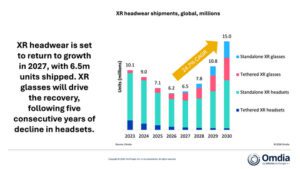
The tethered XR glasses segment, led by Chinese vendors like RayNeo and Xreal, is projected to reach 900,000 units in 2026 – a 19% increase – and maintain double-digit growth to reach 3.8 million units by 2030. Meanwhile, standalone XR glasses remain a relatively small segment, largely confined to enterprise and developer use, with shipments forecast to reach just 93,000 units in 2026. However, the category is expected to grow rapidly over the next five years as hardware matures and spatial computing capabilities improve.
XR headwear is part of the wider intelligent headwear market as defined by Omdia, which also includes AI glasses. “Following three years of rapid growth, AI glasses have begun normalizing face-worn computing for daily use,” said George Jijiashvili, Senior Principal Analyst at Omdia. “This growing consumer familiarity is directly fueling the XR glasses segment, laying groundwork for an industry-wide evolution toward slimmer glasses form factors.”
The standalone XR headset category, which includes the Meta Quest 3 and Apple Vision Pro, is projected to decline 15% in 2026 to 4.7 million shipments, with contractions continuing into 2027, marking a fifth consecutive year of decline for the category since its pandemic-induced peak in 2021/22. A return to growth is predicted in 2028, with shipments forecast to rise to 5 million units.
This recovery relies on Apple introducing a more accessible Vision Pro around 2028, acting as the catalyst for players like Samsung and Vivo to make a more competitive push. Without these developments, growth prospects for the segment remain uncertain. Meanwhile, tethered headsets continue their steep decline, dropping 34% in 2026 to 500,000 units as standalone alternatives displace them.
“Despite maturing technology, bulky XR headsets struggle to demonstrate everyday utility for mainstream consumers,” noted Qiran Ju, Senior Analyst at Omdia. “Meta has prioritized AI glasses, while Google signaled a similar direction through emphasis on XR glasses at I/O 2026. Lighter form factors are better positioned to gain widespread consumer acceptance and steer the future of XR development.”
Notes to editors
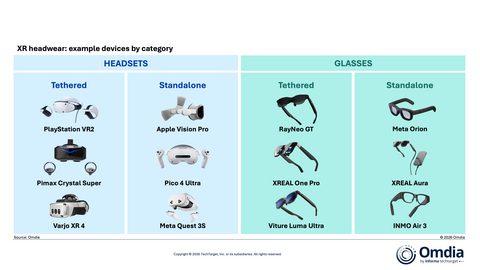
Omdia classifies XR headwear into four categories:
XR Headsets
Tethered XR Headsets
- Fully immersive, bulkier headsets that must be physically wired to an external PC or console. They sacrifice mobility to deliver the highest possible graphics quality and processing power.
Standalone XR Headsets
- All-in-one, fully immersive headsets containing all processing, tracking, and displays within the device itself, allowing complete freedom of movement without wires.
XR Glasses
Tethered XR Glasses
- Lightweight, eyewear-style devices that plug directly into a smartphone, PC, or console. They function primarily as a discreet, wearable personal screen for media consumption, with some models offering basic AR features.
Standalone XR Glasses
- Eyewear that enables untethered spatial computing without relying on a smartphone or PC. These devices either integrate all processing directly into the frames or to maintain a slim profile, offload it to a dedicated, pocket-sized compute unit.
ABOUT OMDIA
Omdia, part of TechTarget, Inc. d/b/a Informa TechTarget (Nasdaq: TTGT), is a technology research and advisory group. Our deep knowledge of tech markets grounded in real conversations with industry leaders and hundreds of thousands of data points, make our market intelligence our clients’ strategic advantage. From R&D to ROI, we identify the greatest opportunities and move the industry forward.
Contacts
This press release is provided by the issuer. The statements and opinions expressed are those of the author and do not necessarily reflect the views of Zeest Media.
© 2026 Zeest Media. All rights reserved.